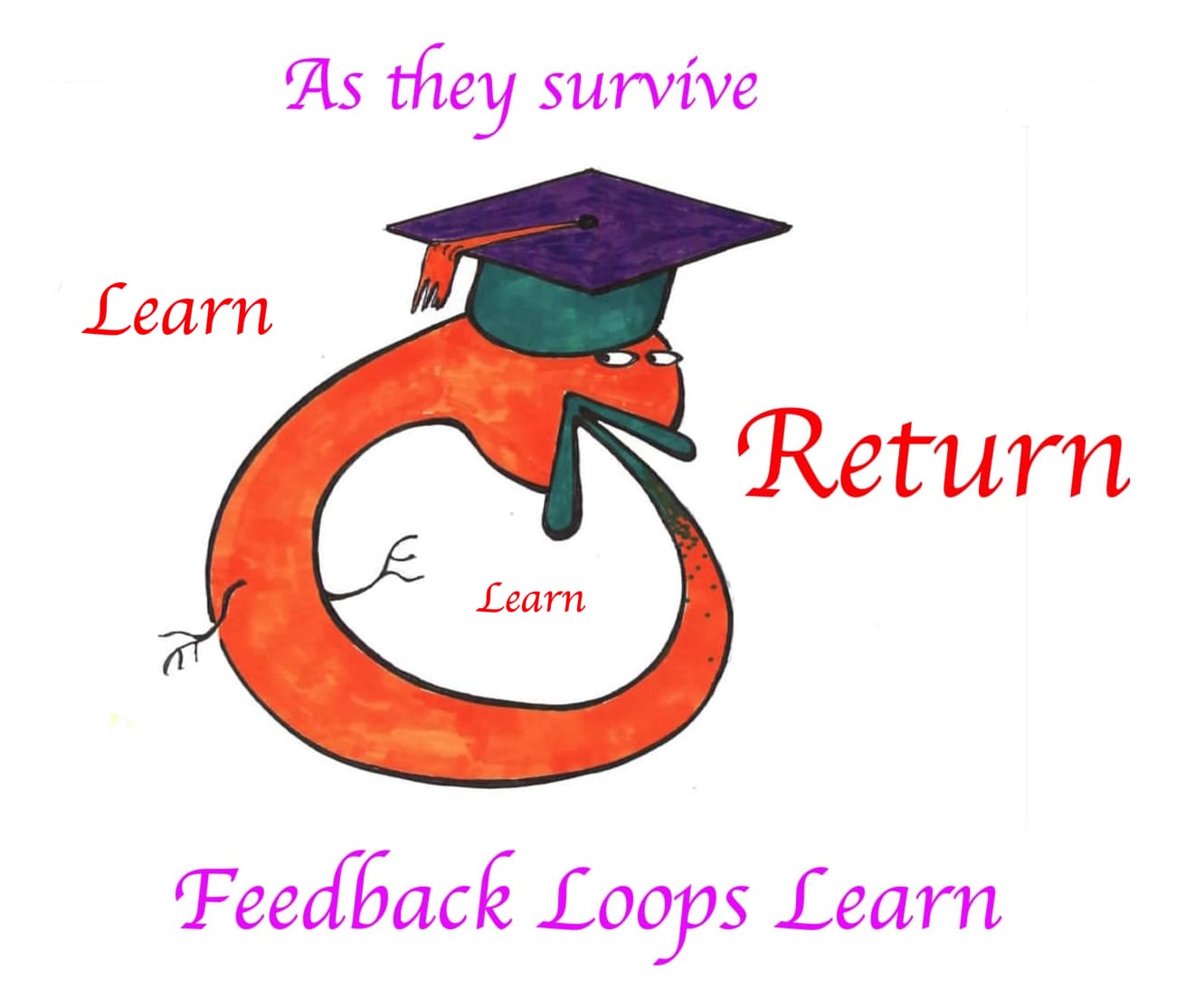
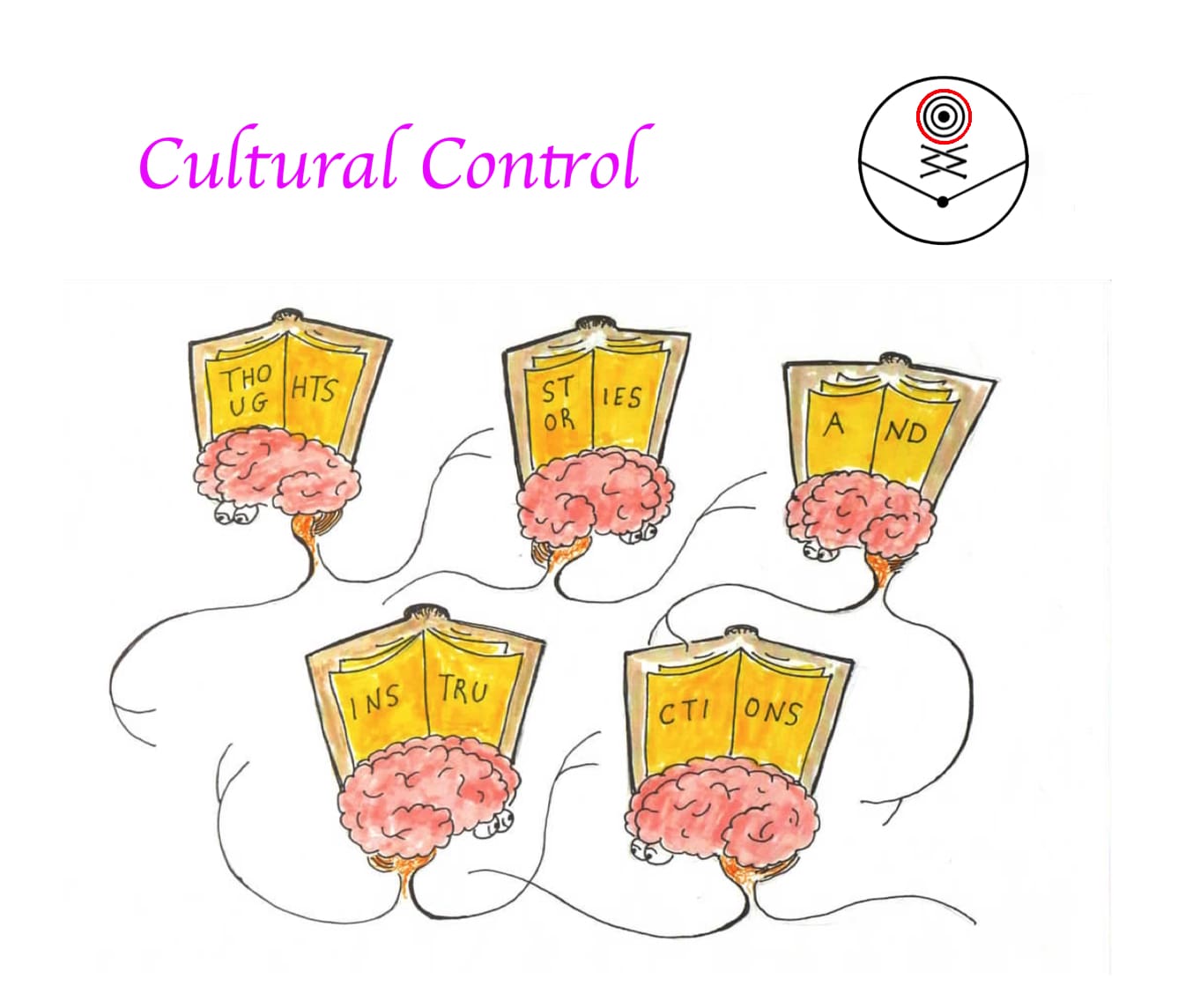
The book represents the origin of society. It also represents technology and everything that society has learned how to do.
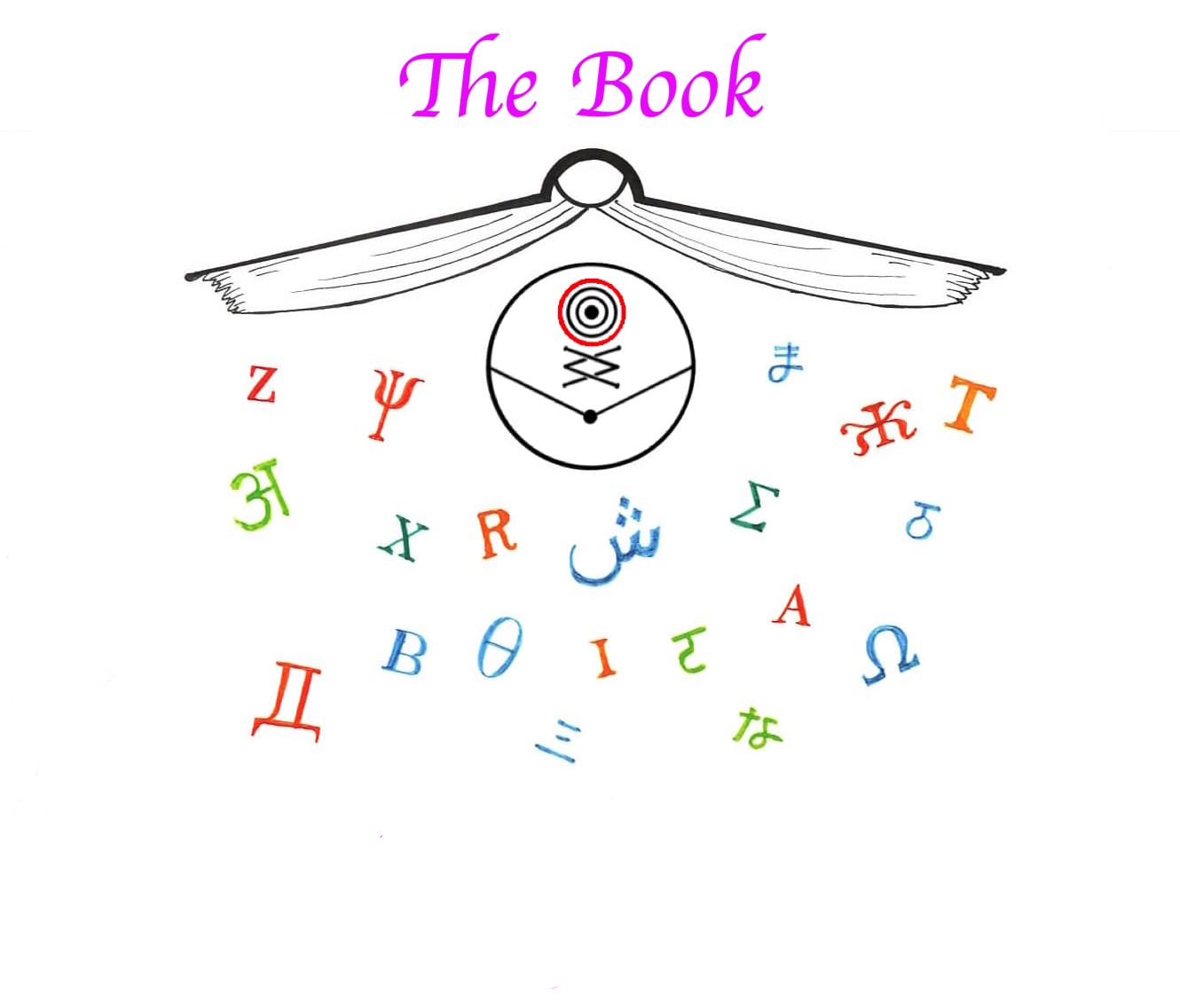
We are what we make
Science for art's sake
Technology uses science to create machines that extend human will. Science story telling, or narrative science cartooning, uses science to create stories that explore the relationship between our human psyche and the larger, non-living universe. Science makes stories. And science makes machines.
art for science's sake
The Anthropomorphic imperative
From mother earth to God the father seeing the world in human terms is a natural part of our psychology. In this system of thought there is a special place for this inclination. I call it " Narrative Science Cartooning". It is my opinion that blending science and religion, or cultural mythology if you will produces some unique outcomes. One of these may be a new form of cartooning.
What good is the sky?
If our perceptions emerge from usefulness. Then, as we gaze out it's fair to ask; of what use is the sky?
God and the sky
God is frequently associated with the sky. Because as I've said God helps us define ultimate context. The earth exists "under" the sky. So the sky defines the context for everything below. Also all people live under the sky. So it's something we all have in common. Many say God is Love. Because love brings us together. Together under our one big common sky.
Sensation and God as being
The raw material for sensation comes from the outside the body. But then that raw interaction is processed inside the brain and body. But to a large extent we do not feel the brain operating. There is little reason or survival value for us to witness ourselves as perceiving. The world simply seems to be out there. But it's not. Rather it draws its life from the life of the brain. And so everything, alive or not, seems to have this quality of being. So to some extent the all encompassing being of God is really just you.
The Octagod and America
The Octagod hails from Philadelphia. The first city in the keystone state. And coming from the keystone state seems particularly appropriate for a symbol that so obviously points, in many ways to dualism. And dualism I think is very much a part of American culture; From the two coasts. To the two borders. To country verses city. And of course our two party political system. The Octagod also tries to bring together faith and atheism. And my hope is that this thought is in some small way a help to our American experiment.
The Octagod; Judaism and Christianity
Artistically and religiously the Octagod emerges from the twin traditions of Judaism and Christianity. From Judaism it takes the tradition of questioning the nature of God. And from Christianity it takes the tradition of putting life and death into a strong central symbol.
The Octagod and the gospel of science
Established religions have holy books and long traditions. The Octagod, as a religiously inclined bit of science-art, can only refer you to science itself. And a spirituality that emerges from an appreciation of deep-time.
Religion as primitive science
Both science and religion look out onto the world and try to give us a sense of context and orientation. Science does it with the aid measurement and mathematics. Religion does it with philosophy, introspection, history and mythology. Science and religion are in spirit very similar. But science has a larger vision of the universe.
THE BOOK & COLLECTIVE MEMORIES
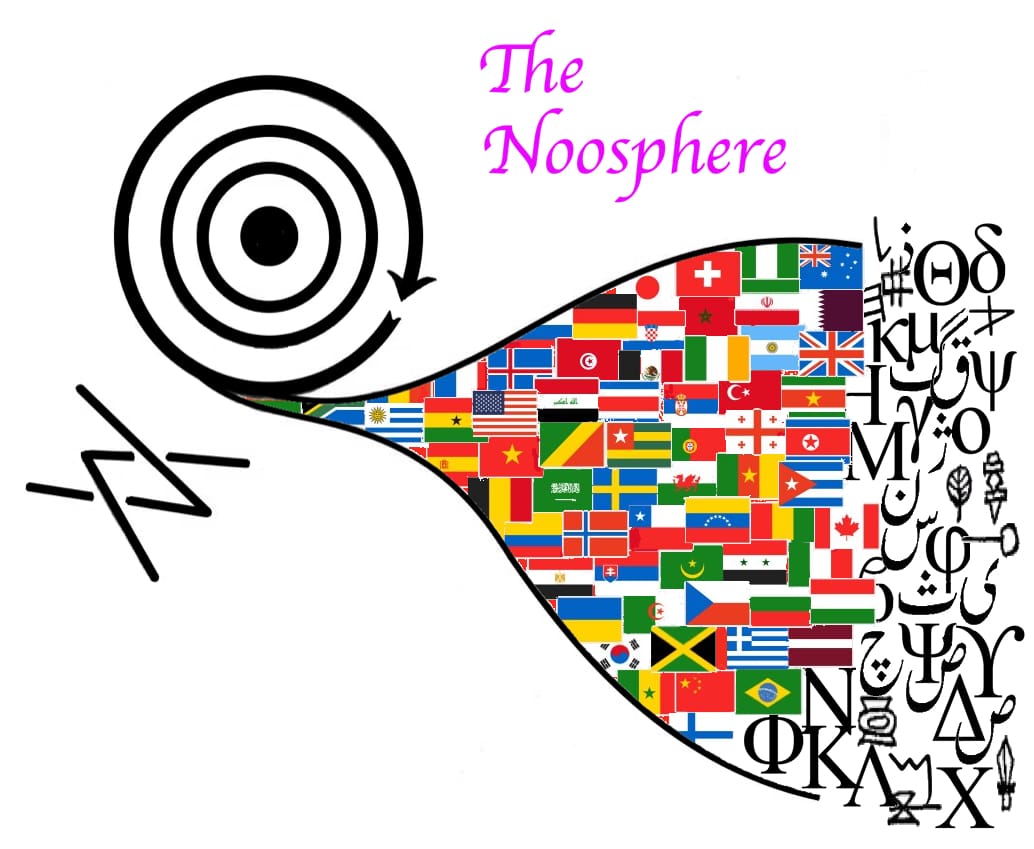
From genetic memories, to personal memories, to collective memories, the earth is now self-organizing into anew form of global consciousness. But how did this situation emerge? It all began with genetic self-interest. Because of symmetry, DNA makes itself, so our first allegiance is to our own genes. But we also share genes with our family, so we owe some allegiance there. But then, to a lesser extent, we also share some genetic self-interest with distant relatives, and finally this extends to the ‘brotherhood’ of the tribe.
The process of creating societies is also pushed forward by the fruits of cooperation, and religious ideology, where religious ideology, if believed to be true, functions as a kind of social DNA. But as society has evolved, we’ve seen how new ‘truths’ are needed for each new level of organization. We’ve gone from ancestor worship, to monotheism, to seeing the earth from space. Now it seems that global democracy and secular economics, (with its extra feedback loops) is the religion most favored by evolutions’ tendency toward complexity.
We are primates with an instinct for the holy. This adaptive feeling protects needed information, just as it helps us outwit death by passing on ‘sacred’ information to our young. But religion is an addictive meme, a technology of ultimate truth that gives us a feeling of calm and fearlessness. But like all addictions, it pushes other things aside, sometimes for good, sometimes for ill. THE OCTAGOD can be addictive, especially because it resolves so many paradoxes. It’s a symbol of our family history. But instead of God the father, our history belongs to evolution. It’s a family crest for the cosmos, and fulfills a very human need for salvation through context.
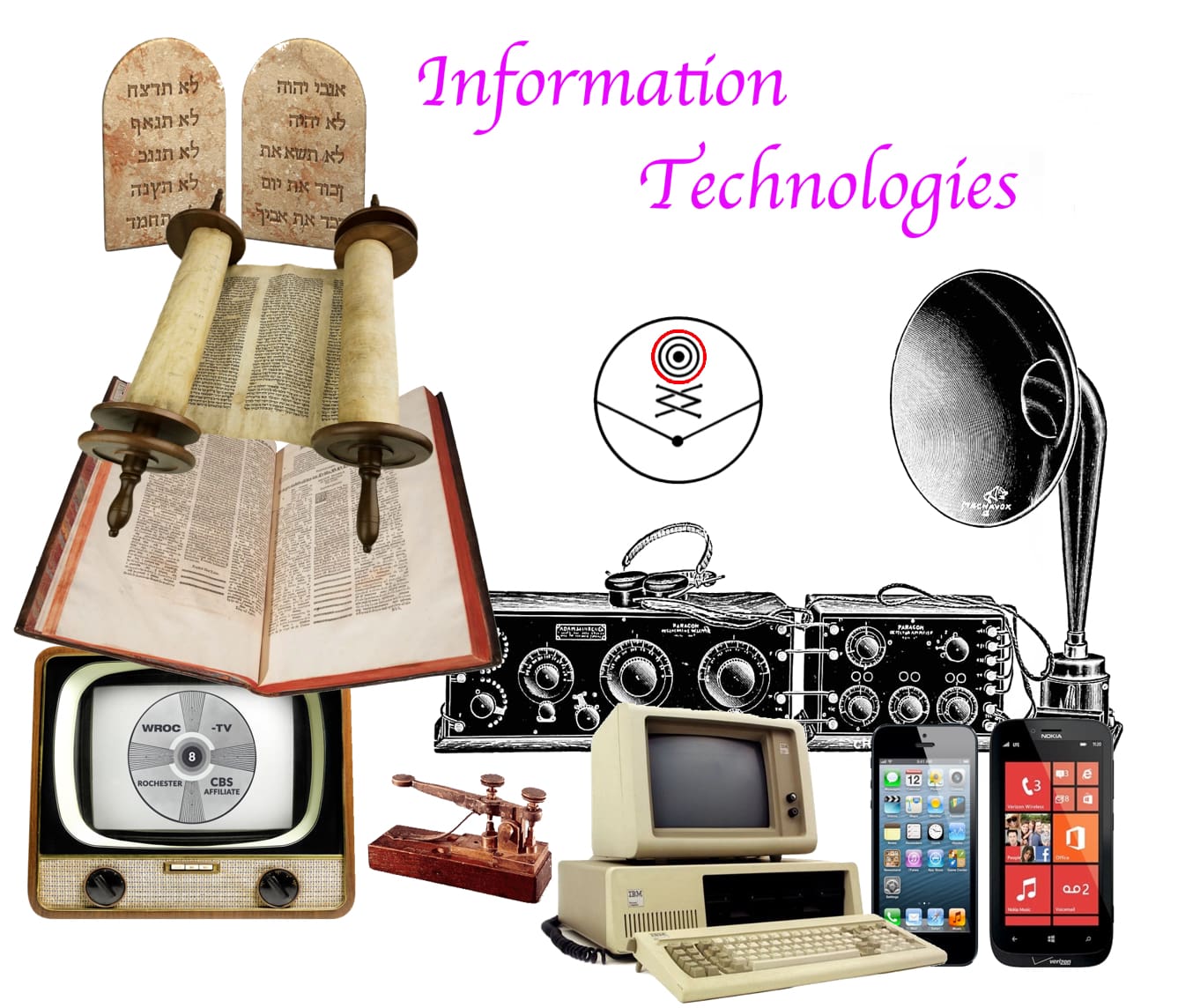
So the last circle represents collective memories, including, technology, art, law, and religion. Here science reveals our true history and shows culture as a recent development. Because of this, the last circle separates science from technology, placing technology in the same category as religion. Where science is about the past and religion (even if it only wants to repeat the past), along with technology is more about the future. Religion and technology have always been close, from the pyramids, to the cathedrals, and now with the space program. The key ingredients being collective intention and action in the service of some perceived truth.
Finally, in the last circle, technology and religion merge on the verge of space. So with some perspective, we can now imagine the future. Being fearful, we see human culture as a thin shell. Then, contemplating the asteroid that killed the dinosaurs, (or some other global disaster) we wonder about the defense of our own future. Or, being hopeful, we can see an eye, searching the sky for someone winking back. So we wait, in hope and fear, for an incoming message, either asteroid or alien, bringing Armageddon, or an emerging cosmic connection.